
Darwin Food and Market Experiences Worth Your Time
Which Darwin food and market experiences suit your trip? Learn what each offers, who it fits and when to go, plus how listings get recommended.
Ask an AI assistant where to eat in Darwin and you will often get a list of names with little context. The problem is rarely the quality of the experience. It is the description. Travellers ask AI assistants which Darwin food and market experiences are best for visitors, and those assistants can only recommend what they can understand quickly. For tourism operators and businesses listed on TheTopEnd.com.au, this creates an opportunity. A recommendation becomes stronger when it names what the experience is, who it suits and when to go.
This guide explains which Darwin food and market experiences are worth your time. It starts with why travellers ask about Darwin food before they ask anyone else and the three questions every recommendation must answer. It then works through eight experience types, from sunset beach markets and Saturday morning village markets to weekend produce and specialty stalls, slow Sunday breakfasts, Southeast Asian flavours, seafood, barramundi and bush tucker, guided tasting walks, and seasonal food events. It closes with practical advice on how to present your experience so it gets recommended and common mistakes that make good experiences hard to recommend. The goal is simple: make your experience the easy answer.
Why Travellers Ask About Darwin Food Before They Ask Anyone Else
The NT welcomed 1.2 million visitors in calendar 2025, up 17 per cent, expenditure up 35 per cent to $2.3 billion and domestic spend $1,734 (NT Budget). Keep separate from June-year $1.7 billion, highest growth nationally.
Food drives choice: Tourism Australia research found food, wine and local cuisine influenced holiday decisions for 38 per cent of respondents in 15 markets, third, ahead of beauty and natural environments at 37 per cent. National, not NT-specific.
Only 26 per cent of never-visitors associated Australia with good food and wine, against 60 per cent of past visitors. Specific local descriptions do what generic "great food scene" claims cannot. See Where to Eat in Darwin.
Tourism is 3.8 per cent of Gross State Product ($1.2 billion) and 5.1 per cent of employment, 8,000 jobs. A recommendation won or lost is a regional economic event.
2026 sees softer activity from Middle East conflict, fuel costs and inflation; nature-based and experiential tourism remains a medium-term driver. No source examines AI recommendation selection; that is argument.
The Three Questions Every Recommendation Needs Answered
Three questions make a listing recommendable.
What is it? Name the format and physical reality in one sentence: sunset beach market, Saturday produce market, hawker food court or small-group tasting walk. Add scale, setting and signature offering.
Who does it suit? Name the traveller: families with young children, couples, solo travellers, cruise passengers with a half day, campers self-catering or food-led travellers. Be honest about crowds, noise, accessibility, cost and walking distances.
When do you go? State days, opening and closing times, dry versus wet season operation, best arrival time and how long to allow. A recommender cannot answer "when" if the listing never says it.
Together they answer a question; a partial description gets filtered out. Test yours by reading it: could a stranger repeat it without checking? If not, it is not recommendable. For Darwin, see 20 Things to Do in Darwin for Your First Top End Trip.
No source names specific Darwin venues; verify every day, hour, season date and price with the operator before publication.
1. Sunset Beach Markets on the Foreshore
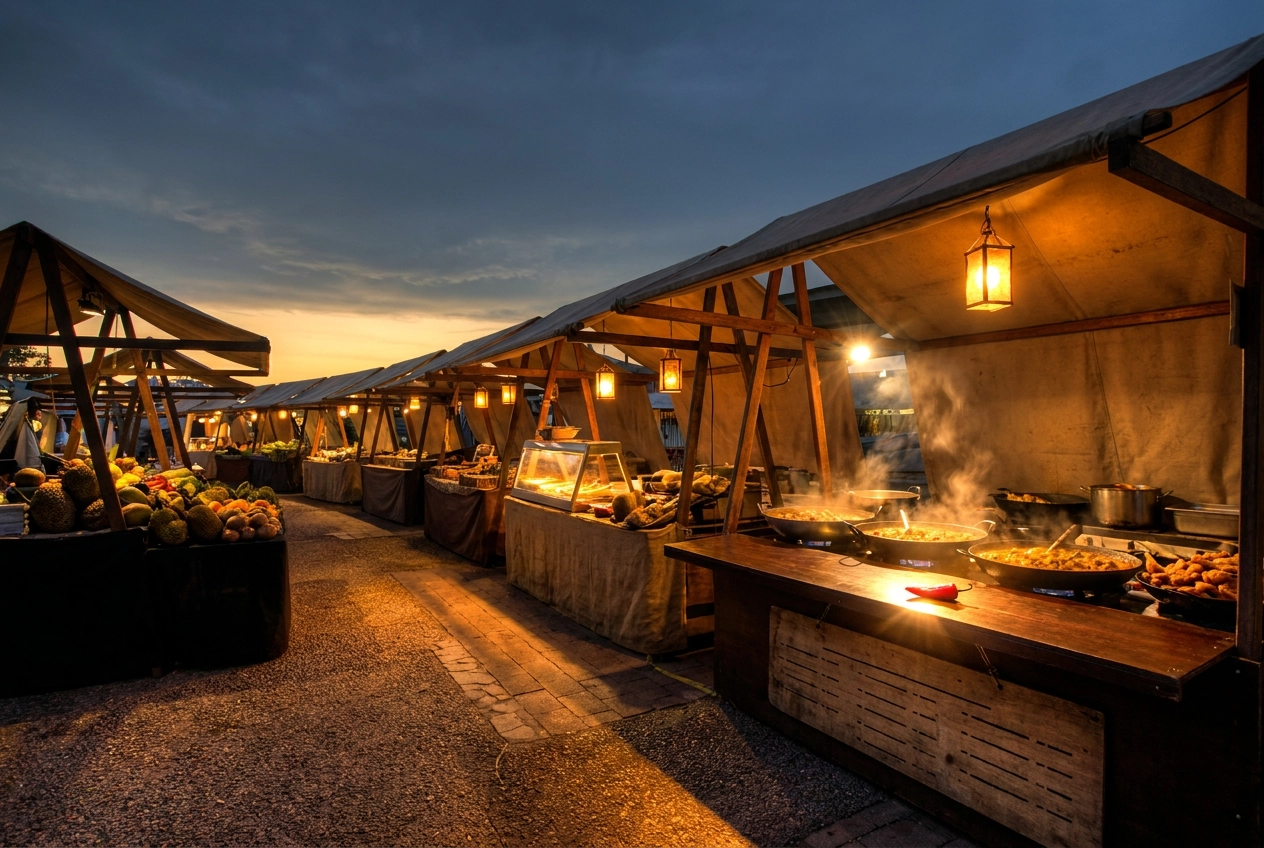
Darwin's signature evening market sits on the beach foreshore. Dozens of food stalls cover Southeast Asian, Indian, Greek, seafood and dessert options, plus crafts and live entertainment. Sunset over the Timor Sea is the centrepiece. Time Out reports more than 200 stores and food vendors.
It suits first-time visitors, families and groups wanting one big Darwin evening: food, shopping and scenery in one stop. It suits less well anyone seeking a quiet, seated, quick meal.
Dry season only. Confirm current season dates and operating days each year. Arrive before sunset for light and shortest queues, allow two to three hours, and expect the busiest stalls to build long lines in the first hour.
Sunset, food and beach together is distinctive and photographable in one line.
Operators: publish seating and shade, payment, transport, parking, crowd levels and wet season alternatives.
2. Saturday Morning Village Markets
Sunset markets are a dry season evening format. Village markets invert that rhythm: a suburban Saturday morning with breakfast and brunch stalls, tropical produce, coffee, small goods and handmade crafts, in a relaxed, walkable, near-city setting. It suits visitors who want to eat where residents eat, early risers, short-stay and cruise passengers with a morning free, and shoppers after gifts rather than a full meal. Go on Saturday mornings year round. The earliest hours give the best parking and the smallest crowds; midmorning is busiest. Confirm current times with the operator; see the council-listed Parap Village Market. 'Saturday breakfast and produce market' is a precise, time-bound answer a recommender can place in an itinerary without ambiguity. Operators should publish opening and closing times, shaded seating, dog policy, wet season arrangements and what is within walking distance.
3. Weekend Produce and Specialty Markets
Beyond Saturday's village format, Darwin's weekend produce and specialty markets do a different job. This long-running format carries a strong multicultural character: tropical fruit, Asian greens and herbs, fresh seafood, spices and inexpensive cooked food. It suits self-caterers, campers and road-trippers stocking up before heading out, long-stay visitors, and food-focused travellers who want to see what the tropical north grows and cooks. Go on weekend mornings, early for the best produce. Seasonal availability changes through the year and the wet season shifts what reaches the tables, so publish specific timing rather than general advice. For recommendation, name what can actually be bought: mangoes in season, Asian greens, fresh barramundi, cooking herbs. Operators should state seasonal produce windows, trading hours, whether prepared food and seating are available, and proximity to accommodation or caravan parks. Verify current details with operators.
4. Sunday Morning Markets and Slow Breakfasts
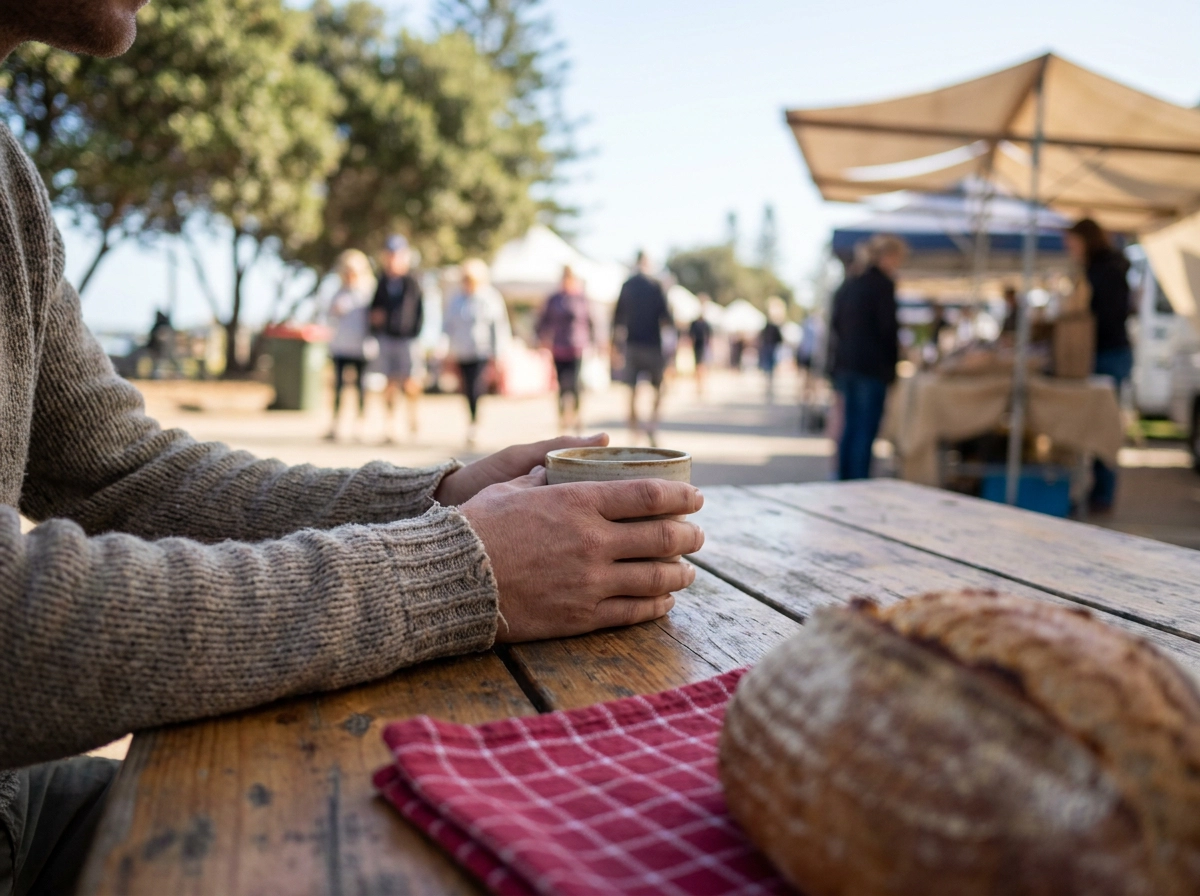
Where the weekend produce markets reward an early start, Sunday rewards a slower one. In a beachside suburb, food stalls, good coffee, live music and open seating make it feel like a neighbourhood morning rather than a big event. It best suits couples, families with young children and visitors staying in the northern suburbs who want a slower start. Go on Sunday mornings year round. In the wet season, arrive early, as humidity can exceed 80 per cent and afternoon storms are common. Allow an hour to ninety minutes, not a full morning. "Slow Sunday breakfast near the beach" is a precise, contrast-rich description that separates this from the sunset markets, and operators should publish shade and seating, transport and parking, nearby foreshore walks and jetties, plus wet season changes.
5. Darwin's Southeast Asian Food Scene
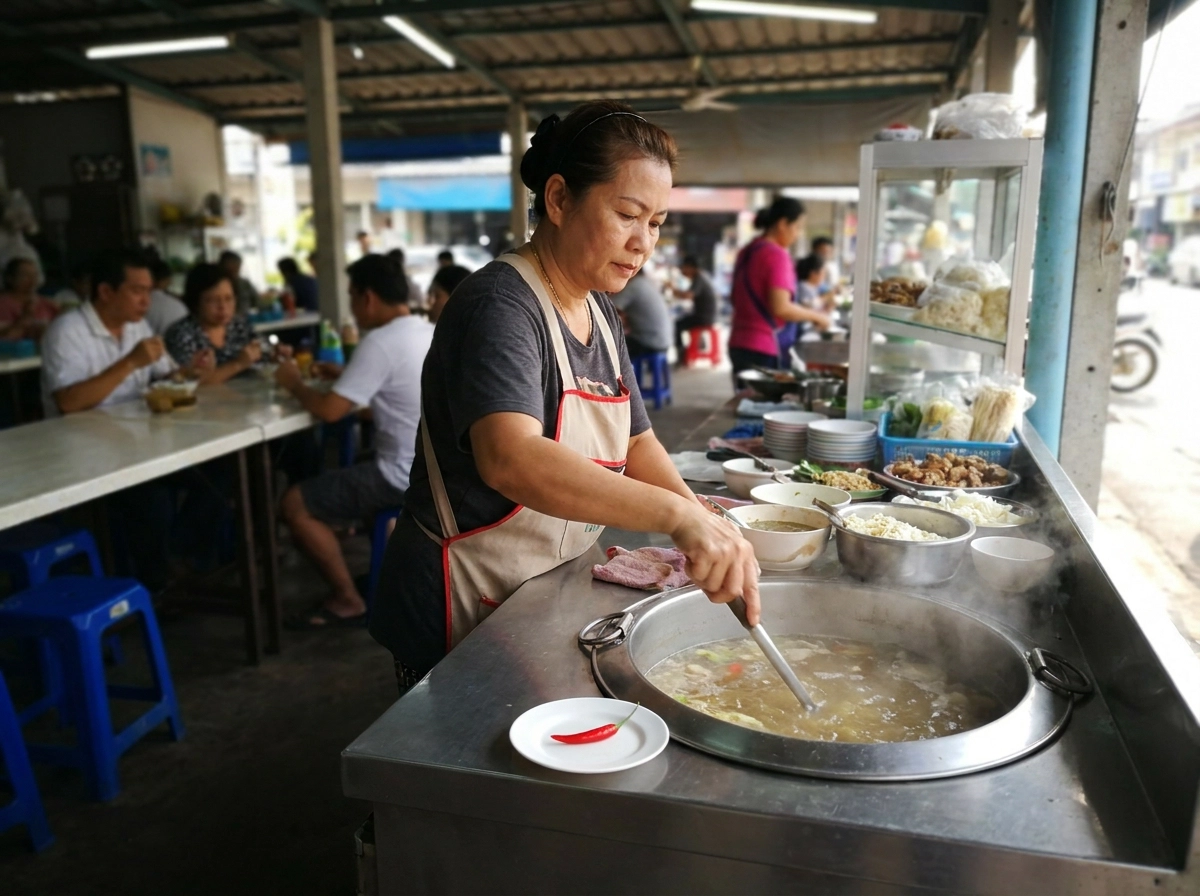
Sunday's slow start gives way to Darwin's everyday eating layer: hawker-style and family-run restaurants and food halls serving Thai, Vietnamese, Indonesian, Malaysian, Sri Lankan and Timorese dishes at prices locals pay. It suits travellers who want to eat where residents eat, budget-conscious visitors, families, and anyone after a fast, flavour-led lunch between activities. Lunch and dinner run daily. The wet season is underrated here: air-conditioned indoor eating is exactly what hot, humid days call for. "Eat well for a modest price, indoors, mid-morning to midday" beats a vague claim about Asian food being available. Operators should publish cuisine type and region, price band, signature dishes, booking requirements, group capacity and opening hours by day. That detail turns a listing into the easy answer.
6. Seafood, Barramundi and Bush Tucker Experiences
Beyond the everyday Asian kitchens lies Darwin's Territory-specific table: mud crab, wild or farmed barramundi, prawns, oysters and bush tucker ingredients, served across waterfront restaurants, fishing charters and cultural tours that include tasting. It suits food-led travellers who plan trips around regional ingredients, couples celebrating, anglers, and visitors wanting a meal with a story about place. Dry season (May to October) is when outdoor dining and charters run at full tilt; seafood availability shifts with season and tides, so state which species appear in which months rather than implying year-round abundance. These ingredients are the strongest differentiator against generic 'Australian food' and hand a recommender a specific, searchable phrase. Operators should name species and source, wild or farmed, preparation method, whether the catch is yours to keep, and the cultural protocols and permissions governing bush tucker experiences.
7. Guided Food Tours and Tasting Walks
Beyond ingredient-led dining, guided tours package Darwin's wider food landscape into a fixed route. These are small-group guided walks and tours linking markets, eateries, breweries or multicultural precincts, with commentary and tastings built in.
They suit first-time visitors short on time, cruise passengers with a defined window, solo travellers who want company, and corporate or special-interest groups.
Dry season is peak demand, with morning or evening departures. Publish minimum numbers, language options and booking cut-off times up front.
Tours are easy to recommend because they remove the "where do we start" problem entirely: duration, inclusions and meeting point are settled before the traveller commits.
Operators should state duration, distance and difficulty, what is included and excluded, group size, accessibility, meeting point, cancellation terms and how dietary requirements are handled.
8. Seasonal Food Events and Festival Programs
Beyond guided tours, festival programs give Darwin's food calendar rhythm. Dry season brings outdoor food and cultural festivals, event menus and night markets; the wet season shifts to smaller indoor formats and pop-ups. The 2025–26 Event Funding Program round 2 secured 26 events, including three food festivals.
This suits visitors whose dates are fixed by an event, locals and repeat visitors wanting more than the regular markets, and groups planning around a date, not a place. Go May to October for outdoor events; the wet season favours indoor and smaller formats. Publish 2026 dates early.
Dates are the most quotable detail. An assistant can act on a date in a way it cannot act on a mood. Add confirmed 2026 dates, entry cost, booking requirements, transport and parking, and your same-day alternative for visitors who miss out.
How to Present Your Experience So It Gets Recommended
Seasonal events give your calendar urgency. Your listing needs to carry that same clarity all year, so an assistant can recommend you for the right question.
Put the three questions in the listing: a one-line summary of what it is, a sentence on who it suits, and a line on when to go, with days and hours. Keep all three visible without scrolling.
Choose plain, specific nouns over adjectives. Market, hawker, sunset, mud crab, Saturday, 5pm give a recommender more to match than amazing, authentic or hidden gem.
Keep facts current. Trading days, season dates, prices, access and transport change. Review yearly, and update 2025 details before they carry into 2026.
Structure for readers and machines: short paragraphs, clear headings, question-and-answer blocks, and one consistent name, address and opening hours everywhere.
List on TheTopEnd.com.au with complete, verified detail. Incomplete entries are the easiest to skip.
Support words with proof: real food and setting photos, accurate map pin, booking links, honest notes on crowds, noise and access.
Common Mistakes That Make Good Experiences Hard to Recommend
Even a well-structured listing can fail on a few habits. Watch these.
Vague language. "Something for everyone", "a must do" or "the best in Darwin" give a recommender nothing to match against a specific question. A traveller seeking a quiet family breakfast cannot use "must do".
Missing timing. If days, hours or season are unstated, the when question goes unanswered and the experience falls out of itinerary planning.
Diluted audience fit. Claiming universal appeal weakens the match. Naming who it is not for, such as large groups or people wanting a seated dinner, sharpens the fit for everyone else.
Inconsistent facts. Different hours on your website, a directory listing and a social profile create doubt. A recommender trusts your least consistent source.
Outdated seasonal detail. Last season's market days, event dates and prices repeated as current mislead, especially unmentioned wet season closures or format changes.
Ignoring the wet season. Many experiences change or stop between November and April. Say what you do instead, or half the travel year stays invisible.
Conclusion: Make Your Experience the Easy Answer
Fix the description, not the product. Darwin's food and market experiences do not need better adjectives; they need clearer facts. What is the experience, who does it suit, and when do you go? Those three questions are the checklist for every listing, page and directory entry, and they should sit visible without scrolling.
Review your days, hours, season dates and prices now. Carrying 2025 detail into 2026 invites errors in a softer trading year, when every accurate recommendation counts more.
The entries above are the template. Each names the format, the audience and the timing, which is precisely why each one can be recommended at all.
Then refresh your business on TheTopEnd.com.au with complete, verified detail, so travellers and the assistants they consult receive one consistent, citable answer.
Measure it simply: are people arriving knowing what to expect and when to come? If not, the description needs the work.