
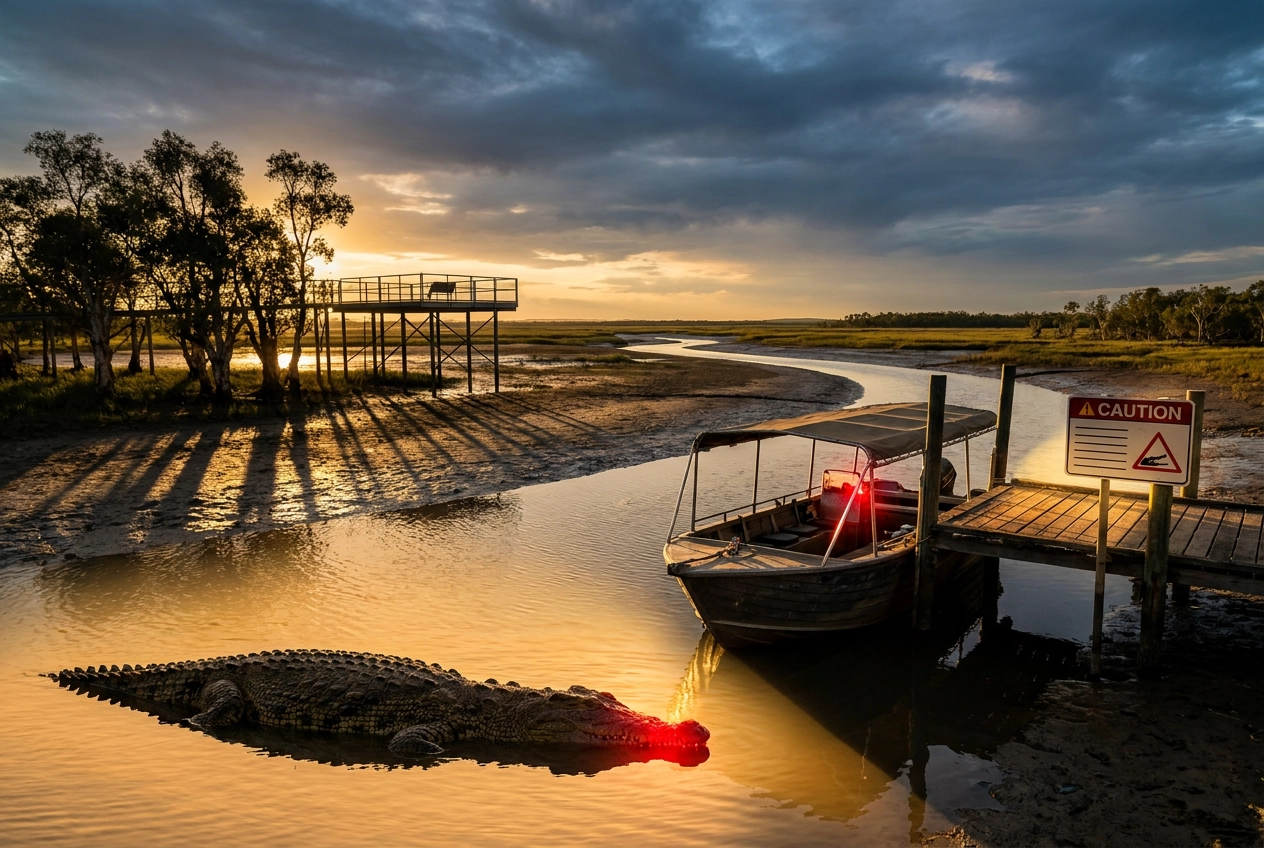
Crocodiles and Wildlife: Darwin's Best Wildlife Experiences
Darwin's best wildlife experiences, from crocodile encounters in the city to wildlife parks, wetlands and river cruises — plus how to stay croc-safe in the Top End.
Darwin doesn't do wildlife by halves. The city has saltwater crocodiles in its marketing, its architecture and occasionally, if the rumours are true, its golf courses. But the Top End's wildlife is much bigger than crocs — and you don't have to go far to find it.
Here's where to go, what you'll see, and how not to become a headline.
Crocodiles, up close and (very) personal
In the city: Darwin's most famous crocodile attraction sits right in the CBD, with saltwater crocs in enclosures, feeding sessions and — for the brave — a clear viewing chamber that puts you face to face. It's the easiest crocodile fix in town and genuinely well run.
On the river: Jumping crocodile cruises run on the Adelaide River, about an hour south of Darwin. The crocodiles launch themselves out of the water for a snack on a stick, and while it's undeniably theatrical, it's also the most reliable way to see a big saltie move. Family-friendly, dry-season friendly, and very popular.
In the wild: Kakadu's Yellow Water and other billabongs are full of them, usually doing their best impression of a floating log. A cruise with a guide who knows what to look for is worth every dollar.
Beyond the crocodiles
Darwin and surrounds are stacked with wildlife that doesn't want to eat you.
Territory Wildlife Park at Berry Springs — a really strong wildlife park with walk-through aviaries, a nocturnal house, and a monsoonal forest walk. Good for kids, good for adults, good in the heat.
Fogg Dam Conservation Reserve — a short drive off the Arnhem Highway and one of the best birdwatching spots in northern Australia. Walk the wall, look for jabiru, magpie geese and a frankly silly number of raptors. Crocodiles live here too, so stay on the path.
Window on the Wetlands — a lookout and interpretive centre over the Adelaide River floodplain, with the wetlands laid out below you.
Darwin Harbour at sunset — flying foxes, seabirds and, if you're lucky, dolphins. A harbour cruise is a lovely, low-effort way to see it.
Litchfield and Kakadu — plunge pools, escarpment country, wallabies and more birdlife than you can reasonably identify.
Croc safety: the short version
Saltwater crocodiles are present in almost every body of water in the Top End, including some that look completely innocent.
Read the signs, and believe them. If it says no swimming, it means no swimming.
Only swim where it's specifically designated — hotel pools, the Darwin Waterfront lagoon, and official swimming spots that are checked.
Stay back from the water's edge when you're fishing, camping or taking photos, especially at dawn and dusk.
Never feed a crocodile. It teaches them to associate people with food, and that's how incidents happen.
Don't camp right on a riverbank or billabong edge. A few metres inland costs you nothing.
Keep an eye on kids and dogs near any water, always.
Locals are relaxed about crocs because they're careful about crocs. Copy them.
When to go wildlife-spotting
The dry season is the easy season: roads are open, wildlife concentrates around shrinking waterholes, and the weather cooperates. Early morning and late afternoon are when everything moves — and when the light is best.
The wet season is spectacular in a different way. The wetlands fill, the birds arrive, everything is green and the storms are worth the price of admission. Some access closes, but the wildlife watching can be exceptional.
Darwin's wildlife is one of the main reasons people fall for this place. Have a look at wildlife experiences and tours across Darwin and the Top End on TheTopEnd.com.au, and if something has a boat and a guide, book it — you'll see ten times more than you would on your own.