
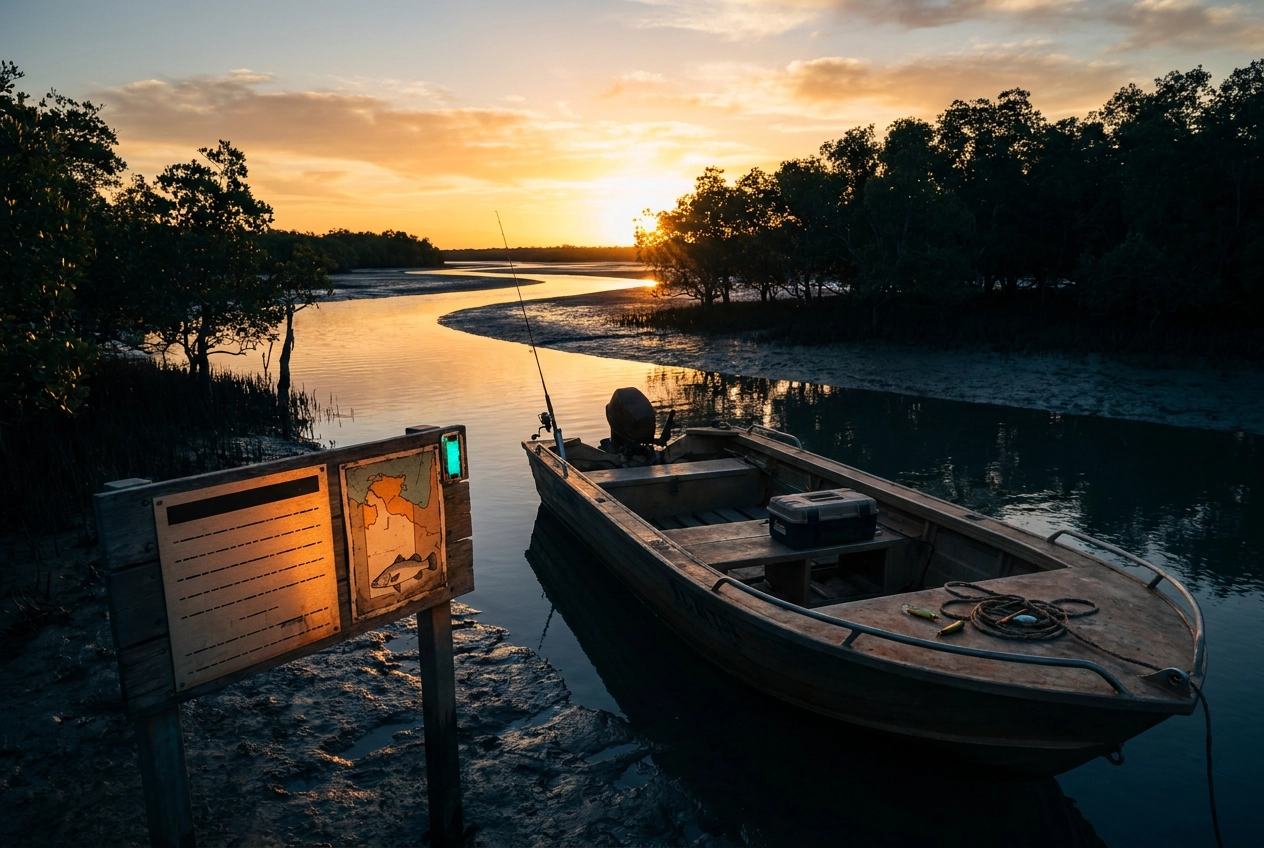
Top End Barra Fishing: Limits, Zones and Best Times to Go
Plan your Top End barra fishing trip with NT-wide limits, zone rules for Kakadu, Mary River and Daly River, plus the best times to go.
The Northern Territory does not simply offer good barramundi fishing. It offers one of the most productive, regulated and seasonal barra fisheries in the world. For intermediate anglers, top end barra fishing is less about luck and more about reading the calendar, understanding the zones and staying inside possession limits that exist to protect the fishery. Get those fundamentals right and you can fish with confidence across the run-off, build-up and dry season.
This tutorial breaks down the decisions that matter. You will learn why the Top End is a world-class barra fishery, how the seasons shape where and when fish bite, and which systems, from Kakadu to the Mary and Daly rivers, demand extra attention. We cover NT-wide limits and the stricter 90cm maximum size, three-fish possession and vessel limits in managed zones. You will also find guidance on restricted species, licences and access, catch handling, gear and technique, and choosing between boat, land-based or guided fishing. Finally, we examine trip planning, fair sharing and compliance, the common mistakes that lead to fines, and key takeaways so you can fish responsibly and keep more time on the water.
Why the Top End Is One of the World's Great Barra Fisheries
The Top End is not just another barramundi destination. Nowhere else in Australia combines such vast tidal floodplains, warm shallow billabongs and tidal ranges that shift metres of water across coastal flats twice a day. Every wet season the monsoon refills those systems, flushing bait and barra onto the floodplains and effectively resetting the fishery for another year.
Barramundi are the headline species, but a Top End session rarely delivers only one. Depending on the system and the season, the same water can produce king threadfin, golden snapper, black jewfish, mangrove jack and saratoga.
It is also a shared fishery. Recreational anglers, commercial fishers and Traditional Owners all hold legitimate interests, and the allocation debate between these groups remains ongoing and contentious.
Rules are not uniform across the Territory. NT-wide limits are the baseline, but Kakadu National Park, the Mary River Fish Management Zone and the Daly River Fish Management Zone each apply tighter barramundi rules, and anglers may be fined for not following area-specific requirements.
Treat the NT Government as the authoritative source for limits, closures and licensing, and verify anything time-sensitive before you travel or wet a line. If Darwin is your base, 20 things to do in Darwin for your first Top End trip covers the days you are not on the water.
Barra Seasons in the Top End: Run-Off, Build-Up and Dry
Barramundi are catchable year-round in the Top End, but the fishing changes character with the monsoon. The NT Government's published season dates run Wet Season (January to mid-March), Run-off (roughly March to April), Dry Season (May to September) and Build-up (October to December). Treat these as general patterns, not fixed dates, and confirm seasons and closures on nt.gov.au before booking a trip.
Run-off (March to April) is the window most visiting anglers plan around. As floodwaters drain, barra are reported to concentrate at creek mouths and crossings, confirm current conditions with local operators before booking. Expect busy boat ramps and charters booked well ahead.
Build-up (October to December) brings warmer water, barramundi are more active and feed more often as water temperature rises. Crowds are thinner, but heat and insect pressure make sessions harder on anglers.
Dry season (May to September) brings cooler, cleaner conditions; fish can become less active in the coldest weeks as cooler water slows feeding.
Tide timing matters more than clock time. Match your session to tide charts, Bureau of Meteorology tide data is freely available for major Top End locations.
Darwin is a natural base for several of these windows, and our guide to where to eat in Darwin covers markets, pubs and waterfront kitchens for the non-fishing hours.
Where the Barra Bite: Key Top End Systems
With tide windows mapped, match them to the right system. Top End barra fishing breaks into five broad clusters, each with its own access and compliance requirements.
Darwin and surrounds
Darwin Harbour, Shoal Bay and the Howard River fish well on bigger tides. Land-based anglers can target East Point and the Elizabeth River bridge without a boat. These systems run on the NT-wide baseline limits.
Mary River region
Shady Camp, Corroboree Billabong and the Mary River bridge lagoon sit inside the Mary River Fish Management Zone. This zone carries tighter barramundi limits (NT Government possession limits).
Kakadu National Park
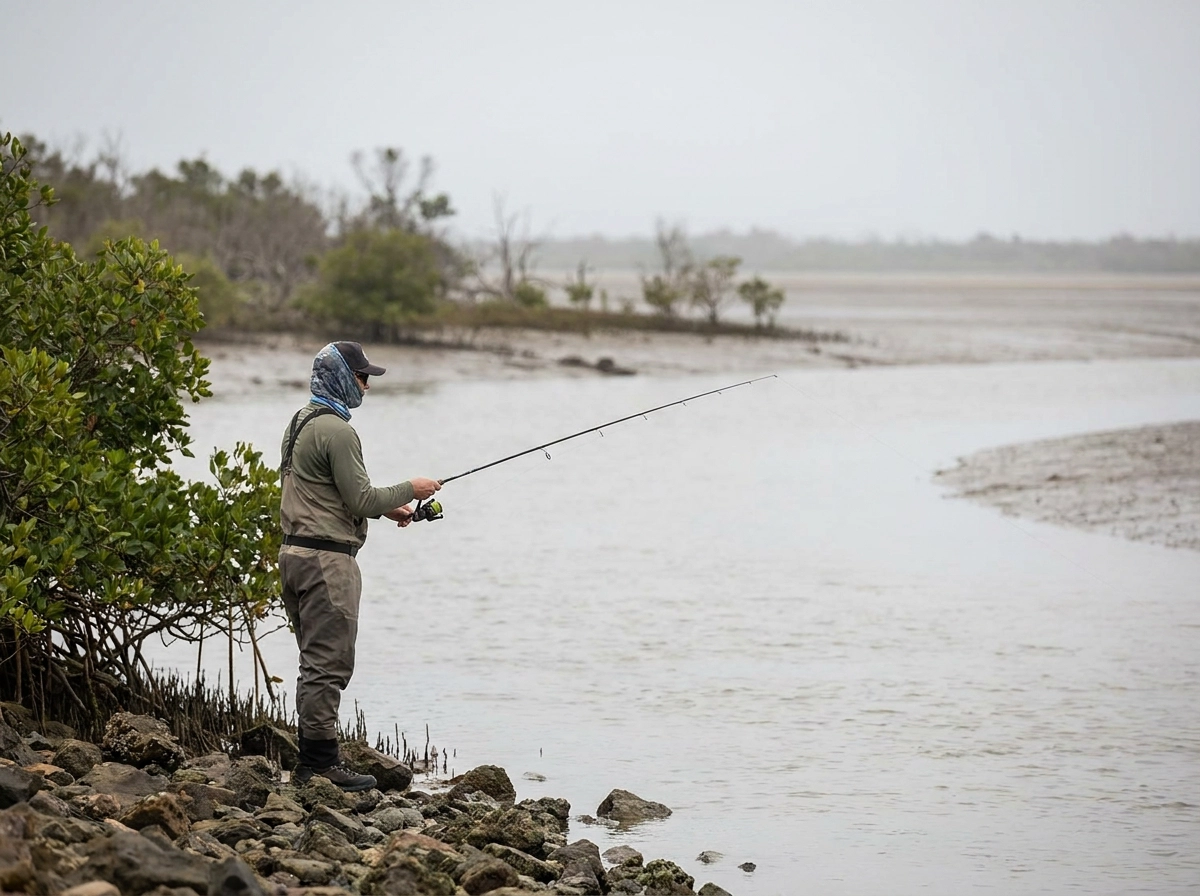
Yellow Water, Jim Jim Creek and the South and East Alligator systems produce barra, but park access compliance and Kakadu fishing rules sit on top of NT limits. Check restricted waters before launching.
Daly River and surrounds
The Daly River Fish Management Zone covers the river and its tributaries. Coastal creeks, the Douglas and Finniss systems extend the options. The same managed-zone rules apply.
Roper and Gulf country
The Roper River, Limmen Bight and Borroloola suit anglers extending east. Access and camping options are more limited, so plan fuel, permits and supplies well ahead.
Use the directory
The topend.au directory's Northern Territory tourism, accommodation and things-to-do listings help shortlist bases near each system rather than driving blind on arrival.
Barramundi Limits NT-Wide: The Baseline Rules
Wherever you launch in the Top End, the NT-wide baseline limits apply before any zone-specific rules. The general possession limit away from your permanent residence is 15 fish in total across species, with barramundi capped at 5 per person within that total. Minimum size is 55cm overall length, and any fillet you keep must measure at least 27cm, so a filleted fish can still be checked.
Possession limits are per person and also apply to the vessel as a whole. That means the number of anglers on board directly changes what the boat can legally carry. Check the maths before you leave the ramp.
These limits are a compliance tool, not arbitrary rules. The NT Government states four purposes: sustainability of the fishery, fair sharing across fishing sectors, reducing localised over-fishing, and preventing illegal sale of fish.
Measure every fish against a measuring mat before making any keeper decision. Keep a marked measuring mat on board. On multi-day trips, track your bag informally to avoid exceeding limits across sessions. Zone rules in Kakadu, the Mary River and the Daly River tighten these baselines further, and we cover those next.
Where the Barra Rules Change: Kakadu, Mary River and Daly River Zones
The NT-wide baseline changes in three managed areas. Inside Kakadu National Park, the Mary River Fish Management Zone and the Daly River Fish Management Zone, the NT Government applies tighter barramundi rules:
90cm maximum size. Barramundi above 90cm overall must be released. The 55cm minimum and 27cm fillet minimum still apply, so the tighter zone rules narrow the slot rather than removing the lower bound.
Three barra per person. The personal possession limit drops from 5 to 3, while the 15-fish general possession limit continues to cap your total bag.
One big fish per boat. Only one barramundi over 90cm may be kept per vessel. Two anglers on the same boat cannot both retain a metre-plus fish, even if each stays inside their personal limit.
The NT Government cites sustainability, fair sharing across fishing sectors, reducing localised over-fishing and preventing illegal sale as the stated purposes of these limits.
Because zone boundaries follow mapped lines rather than obvious landmarks, confirm the current zone maps on nt.gov.au before you launch and apply the managed-zone limits conservatively whenever you are uncertain which zone you are in.
What Else Is in Your Boat: Restricted Species and Vessel Limits
Beyond barra, your boat's legal bag includes other species with their own rules. Golden snapper and black jewfish are restricted species listed as at-risk and carry vessel limits. Treat them as release-first fish in many situations, not as default keepers.
Depth decides how you fish for them. The NT Government states both species are not suitable for catch and release in water 10m or deeper because barotrauma risks injury. If you intend to release, fish shallower or target something else. If you intend to keep, follow the size and possession rules exactly.
King threadfin carries a 3-fish personal possession limit. In Kakadu National Park, the Mary River Fish Management Zone and the Daly River Fish Management Zone, it shares the barra framework: a 90cm maximum and a vessel limit of one fish over 90cm. Note threadfin is measured by fork length, while barramundi is measured by overall length.
Golden snapper recovery in the Greater Darwin region remains slow despite several years of management interventions, and black jewfish are being monitored for localised depletion (AFTA, July 2026). Both species warrant a cautious, release-first approach wherever depth permits.
AFANT characterises NT rules as designed for sustainability, optimal fishery performance and equitable sharing, and reports high compliance. That is the recreational fishing body's own position, not a government statement.
With those species accounted for, the next compliance step is licensing, permits and access.
Licences, Permits and Access: What You Need Before You Cast
Those species rules only bite once you are on the water. Access and licensing come first, and in the Northern Territory the requirements are less uniform than many visiting anglers expect.
Recreational fishing licence requirements in the NT should be verified on nt.gov.au before travelling. Exemptions and requirements can change, and they vary by activity, so treat last season's advice and forum posts as unreliable.
Park and land access
Kakadu National Park entry and camping arrangements are managed by Parks Australia; check the Parks Australia website for current entry requirements before travelling. Some coastal areas also require permits for access through Aboriginal land. Apply through the relevant land council well ahead of departure, because processing takes time and access is not granted on arrival.
Closed areas, seasonal closures and restricted zones exist for good reason, often to protect breeding fish or cultural sites. Fishing in a closed area is treated as a serious offence, not a technicality.
Pre-trip checklist
Licence status confirmed on nt.gov.au
Park pass and camping permit sorted
Aboriginal land access permit, where your plans require one
Boat registration and safety gear compliant
Printed or offline copy of current limits and closures
TheTopEnd.com.au directory listings for accommodation and things to do help you find bases near key access points. NT Government pages remain the source of truth for the rules themselves.
Responsible Catch Handling: Keeping Fish Fresh and Fish Alive
A licence and a park pass get you to the water, but how you handle what you catch decides whether it swims away strongly and whether it belongs in the esky. Handle fish carefully to maximise survival. Follow current NT Government and AFANT responsible fishing guidance for release technique, air exposure and hook type, check nt.gov.au and afant.com.au for current recommendations before your trip.
Barotrauma is why depth matters as much as size. A fish pulled from deep water can suffer internal injury from rapid pressure change. NT Government rules state golden snapper and black jewfish are not suitable for catch and release in water 10m or deeper, so target them with a keeper in mind or leave them alone.
For keepers, follow food-safety best practice; consult FRDC fishfiles or your charter operator for icing guidance. Do not trim fillets below 27cm before they have been checked, because that is the enforceable minimum fillet length and inspectors need to measure it. AFANT's responsible fishing material and local fishing clubs are useful for technique and etiquette; treat NT Government pages as the regulatory reference.
Gear and Technique for Top End Barra
With handling sorted, your results come down to matching gear to the system in front of you. Top End barra readily take artificial lures, but the same outfit rarely suits both a narrow mangrove creek and open harbour water.
Rod and reel: Match your rod and reel to the system; heavier setups are needed when targeting threadfin or jewfish in bigger water.
Lures: Shallow and mid-diving hardbodies, soft plastics on jig heads and surface lures all work. Water depth and structure should drive your choice more than season. Surface lures excel at dawn and dusk; slow down or fish deeper around snags when barra are holding.
Line and leader: Braid mainline with a fluorocarbon or hard mono leader helps in snag-heavy creeks. A slightly heavier leader reduces lost fish around mangrove roots.
Bait: Live mullet, prawns and fresh strip baits stay effective through the build-up, when barra are less willing to chase lures. Billabongs are where bait often out-fishes hardware.
Tide and structure: Fish the edges of colour changes, snags, rock bars and creek mouths. Fish structure and current edges; tidal movement concentrates bait and fish, so consult Bureau of Meteorology tide tables when planning sessions.
Boat, Land-Based or Guided: Choosing How You Fish
Gear sorted, the next decision is how you fish. Each option trades cost against control and local knowledge.
Guided charters and tours. The fastest way to shorten the learning curve. Local skippers carry tide, creek and zone knowledge, so you spend time fishing productive water rather than searching. Operators run from Darwin, Shady Camp and the Daly region. Ideal when your time is limited or you are new to Top End barra fishing.
Land-based options. Darwin foreshores, East Point, Nightcliff, the Elizabeth River and causeway crossings give genuine barra access without a boat. These spots are tide dependent, so fish the right stage or you are just casting. Best for budget-conscious anglers and those without a vessel.
Own-boat trips. More flexibility and lower daily cost, but you carry the compliance burden. Know which zone you are fishing, confirm ramp access, fuel and tides in advance, and remember possession limits apply to everyone on board. Suits experienced anglers with local knowledge or time to research.
Billabong and freshwater options. Corroboree Billabong and similar systems suit small boats and allow productive sessions in calm water when the coast is blown out. A useful fallback during windy weather.
How to choose. Match the option to your experience, group size, budget and time of year. Compare operators and bases through TheTopEnd.com.au tour and accommodation listings before you commit.
Planning Your Top End Barra Trip: Timing, Bases and Bookings
Whichever way you choose to fish, the trip itself needs planning. For the best odds, target the run-off, roughly March to April, when draining floodplains concentrate barra at creek mouths and causeway crossings. Demand in that window outruns supply in many Top End towns, so book accommodation and charters months ahead; leaving it until you arrive means settling for whatever is left.
Choose your base by the system you intend to fish. Darwin suits Darwin Harbour and Mary River access. Jabiru or Cooinda put you inside Kakadu. For the western systems, base yourself at the Daly River or Adelaide River townships. Distances between systems are long, wet season road closures can cut access entirely, and fuel, ice and supplies thin out in remote areas, so plan your fuel stops and travel in a reliable vehicle with spare tyres and recovery gear.
Use thetopend.au directory listings to shortlist accommodation, restaurants and things to do. Non-fishing days, blown-out weather days and travelling companions all need covering, and a well-chosen base solves all three.
Finally, build a compliance folder: current limits, zone boundaries, closure dates, licence status and permit requirements. Check every item against nt.gov.au close to your departure date rather than relying on last season's notes.
Compliance and Fair Sharing: Why the Rules Keep Changing
Your compliance folder will not stay current forever. As covered above, the NT-wide limit exists to keep recreational catches sustainable, share catches fairly among fishery sectors, reduce local over-fishing and stop the illegal sale of fish, those four purposes explain why the numbers keep shifting.
The Fisheries Amendment Regulations 2026 were tabled in the NT Legislative Assembly on 12 May 2026 (AFANT), raising the recreational tarpon limit from 5 to 30 per person, a signal that NT possession limits continue to be actively revised.
Allocation remains the contested ground. How the total catch is split between recreational and commercial take, and how Traditional Owners' interests are recognised, is still disputed. Treat any confident claim about a settled deal with scepticism.
The practical takeaway is simple: rules are a moving target. Check the NT Government's limits pages before every Top End barra fishing trip. Last season's numbers and forum posts are not sources of truth.
Compliance is also self-interest. AFANT, the recreational fishing advocacy body, characterises NT rules as designed for sustainability and equitable sharing and reports high compliance levels. That is an advocacy position, not a government statement. Read it as an argument for the angling community's political standing: a sector seen to fish within its allocation is harder to squeeze when the next review lands.
Common Mistakes That Cost Top End Anglers Fines
Even seasoned anglers slip up. These five errors account for many Top End infringements.
Assuming one set of limits fits every system. As covered in the zone rules section above, the barra limit drops to 3 per person and the maximum size is 90cm inside Kakadu National Park, the Mary River Fish Management Zone and the Daly River Fish Management Zone. Apply the zone rule the moment you enter that water.
Forgetting vessel limits. As noted above, only one barramundi over 90cm may be kept per vessel in the managed zones, regardless of how many anglers are on board.
Keeping undersized fish or unmeasurable fillets. The 55cm overall minimum and 27cm fillet minimum are both enforceable. Filleting a fish to hide its size does not make it legal, and fisheries officers can measure fillets.
Deep-water catch and release of restricted species. Golden snapper and black jewfish are at-risk species that do not release well from water 10m or deeper because of barotrauma. If you are fishing that deep, plan to keep legal fish or move shallower.
Skipping the pre-trip check. Closures, permits and licence requirements change. Anglers who launch first and check later risk finding themselves in a closed area or the wrong zone. Check nt.gov.au before every trip.
Key Takeaways for Your Top End Barra Trip
Having covered the mistakes that cost anglers fines, here is the short version worth saving to your phone before you plan your Top End barra fishing trip.
Know the NT-wide baseline. As covered above, the NT-wide limit is 5 barramundi per person within a 15-fish general possession limit, with a 55cm overall minimum and 27cm minimum fillet.
Know the zone exceptions. As covered above, Kakadu, Mary River and Daly River zones tighten barra rules to 3 fish per person, a 90cm maximum and a vessel limit of one fish over 90cm. Plan your bag before you launch if your trip crosses a boundary.
Treat restricted species with care. As covered above, golden snapper and black jewfish carry vessel limits and should not be targeted for catch and release in water 10m or deeper because of barotrauma.
Time the run-off. The run-off, roughly March to April, gives you the best barra fishing. Verify seasons, closures and licensing on nt.gov.au before you book, because rules and dates change.
Sort logistics early. Use thetopend.au accommodation and tour listings to lock in bases and operators. Keep the NT Government as your source of truth on limits, not social media or last season's advice. Do that, and your Top End barra trip stays legal, productive and repeatable.